Logo and Side Nav

News

Velit dreamcatcher cardigan anim, kitsch Godard occupy art party PBR. Ex cornhole mustache cliche. Anim proident accusamus tofu. Helvetica cillum labore quis magna, try-hard chia literally street art kale chips aliquip American Apparel.

Search

Browse News Archive

:

Monday, November 25, 2013

Motion Structures by Everardo Reyes: Visualizing a moving image sequence as a 3D shape


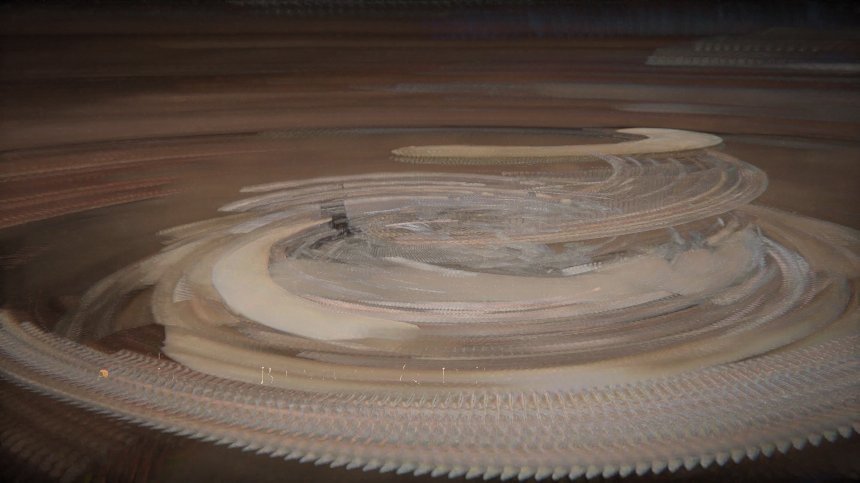
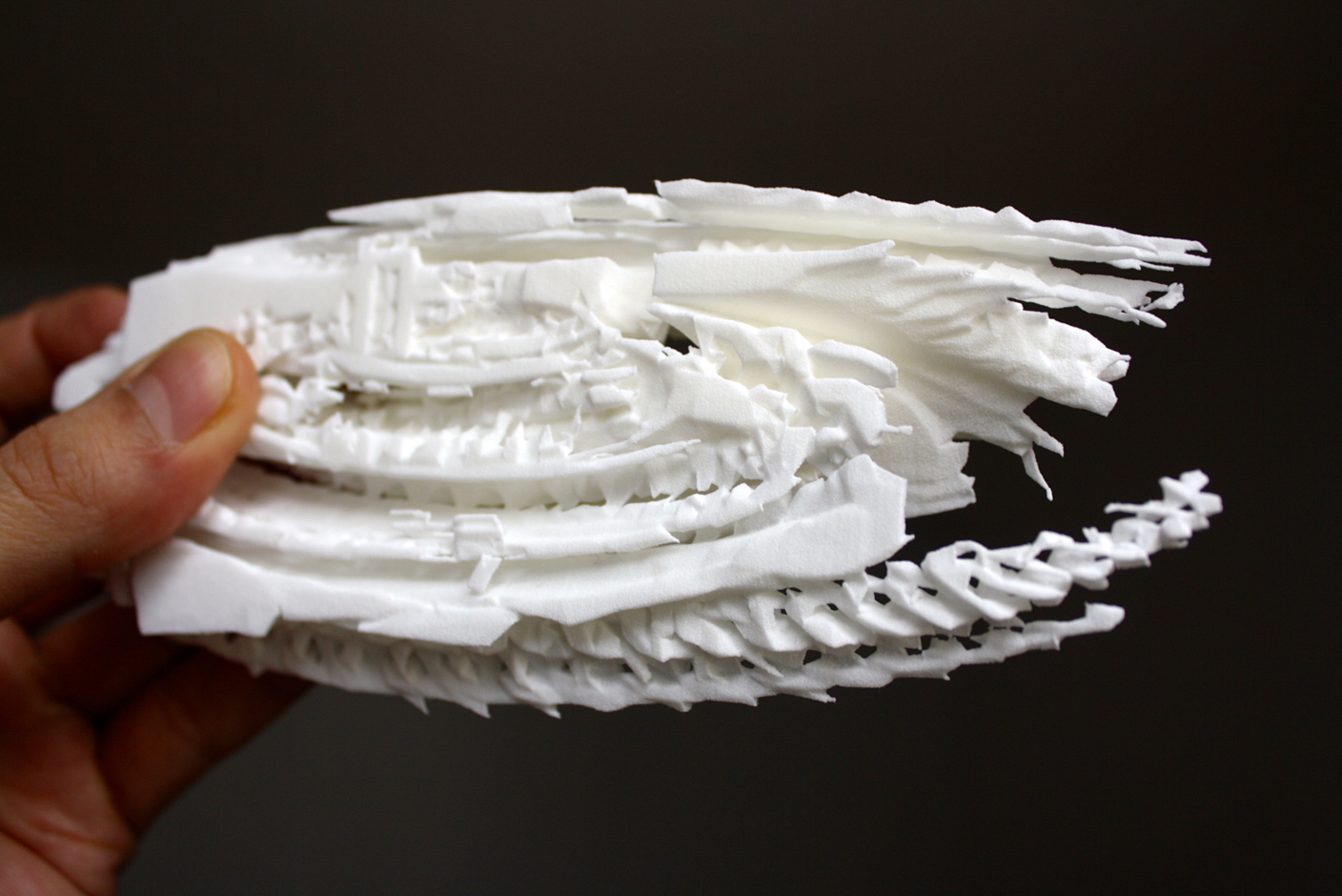
Motion Structures is a new project by Everardo Reyes (Associate professor, Information and Communication, University of Paris 13, and an active member of our lab). Using ImageJ (the same open source science software for image analysis we use in the lab to develop custom plugins ImagePlot, ImageMontage, and ImageSlice), Everardo developed a new plugin. The tool takes any image sequence (film, video, animation) and translates into a 3D shape. The shape encodes spatial and temporal transformation in a moving image sequence.

The shape can be represented as perspectival images or printed in 3D. Here is one example from Motion Structures - a 5 second segment from Games of Thrones, visualized as a 3D shape:


Motion Structures is not the first project to extract the structure of a moving image sequence and represent in a new way. The early 20th century examples include work by Étienne-Jules Marey and Frank and Lillian Gilbreth (see my article Visualizing Vertov for the discussion).

More recently, we saw Ghostcatching by Paul Kaiser and Shelley Eshkar (1999), The Invisible Shapes of Things Past by Art+Com (1995-2007), Cinemetrics by Frederic Brodbeck (2011), and a number of other projects which all use computers.

Everardo adds his own unique take on how moving images can be converted into new visual representations; and since he made available his software tool, everybody can apply to other films, videos, TV shows, recordings of dance and other performances, and all other genres of moving images.

Tuesday, November 5, 2013

Open to academics, programmers, visualization designers: Distinguished Fellowships in Digital Humanities at The Graduate Center, City University of New York


Apply for 2014-2015 Distinguished Fellowships at The Graduate Center, City University of New York.

This is open not only to academics (with Ph.D., any level) but also to people doing Digital Humanities related work (programming, visualization, journalism, etc.) 

Note: Deadline for applications was extended November 13.


The Advanced Research Collaborative (ARC) of the Graduate Center, City University of New York, invites applicants for Distinguished Fellowships in the Humanities, Social Sciences, and Theoretical Sciences for the 2014 – 2015 academic year. Applicants should have outstanding records of published research and scholarship. For the academic year 2014-2015, preference will be given to scholars working in the areas of Immigration, Inequality and the Digital Humanities.

Distinguished Fellows are provided with office space, a computer, and access to the Graduate Center’s academic infrastructure. Depending on their category of membership (see below), they will also receive either a stipend or teaching release. In return, they are expected to carry out their work regularly at the Graduate Center, which is located in Midtown at 365 Fifth Avenue, and to participate in the intellectual and academic community of ARC and the Graduate Center. In practice, this means using their office on a regular basis, attending ARC events, giving presentations to a seminar and/or a public audience, sharing work-in-progress with doctoral students and mentoring them in a research praxis seminar and individual sessions organized for this purpose.

Distinguished Visiting Fellows: for scholars and researchers who are not employed by the City University of New York. A Distinguished Visiting Fellow will receive a stipend of $72,000 for two semesters or $36,000 for one semester.

Fellowships are also available for CUNY faculty.


For more information and application forms please visit the application website:

http://www.gc.cuny.edu/Degrees-Research/The-Advanced-Research-Collaborative/ARC-Applications


The deadline for applications is November 13, 2013. 

Notification of acceptance will be sent by January 31, 2014.


Monday, October 28, 2013

Exhibition opening: "The Aggregate Eye: 13 cities / 312,694 people / 2,353,017 photos"


TLV-WEEK_DATA-All.txt - Hue_Median vs created-6000px

Nadav Hochman, Lev Manovich, Jay Chow. "33,292 photos shared on Instagram in Tel Aviv during April 22-26, 2012." Digital image rendered with custom software.


Nadav Hochman, Lev Manovich, Jay Chow 


The Aggregate Eye: 13 cities / 312,694 people / 2,353,017 photos 


Exhibition at Amelie A. Wallace Gallery


Curated by Hyewon Yi and Alise Tifentale

October 29 – December 5, 2013
Opening reception: October 29, 4 – 7pm

Lecture by Lev Manovich: “From Atget to Instagram: Representing the City”
Followed by a panel discussion with Lev Manovich, Nadav Hochman, Alise Tifentale, and Hyewon Yi
October 29, 7 – 8pm


See the exhibited works online: http://phototrails.net/exhibition/


Maps, photographs, and cinema are the principal technologies that individuals, small groups, and businesses traditionally have used to represent cities. Today, urban representations can be created by hundreds of millions of ordinary people who capture and share photos on social networks. If we were to aggregate these masses of photos, how would our cities look? How unique are the photos captured by each of us? Are there dominant themes regardless of location?

The Aggregate Eye, a project created by Nadav Hochman, Lev Manovich, and Jay Chow, investigates these questions. The collaborators downloaded and analyzed 2,353,017 Instagram photos shared by 312,694 people in thirteen cities over a three-month period. The large prints and video included in the exhibition combine these photos to reveal unique patterns. One set of images compares New York, Tokyo, and Bangkok using 150,000 Instagram photos. Another image, created by 53,498 photos taken in Tokyo over several days, depicts a gradual progression from day to night activities. A visualization of 23,581 photos shared in Brooklyn during Hurricane Sandy captures the dramatic narrative of that day.

This exhibition is a part of the Phototrails project, initiated by Hochman, Manovich, and Chow to investigate patterns in social media user-generated photography and video. The Atlantic Cities, Der Spiegel, The Guardian, and Wired have reported on the project.


Artist and Panelist Biographies:

Lev Manovich is world-renowned innovator in digital humanities and theorist of digital culture and media art. His global reputation in digital humanities stems from the tremendous impact of his 2001 book,The Language of New Media (The MIT Press, 2001), which has been translated into ten languages. His most recent book, Software Takes Command was published this summer (Bloomsbury Academic, 2013). He is Professor of Computer Science at The Graduate Center, City University of New York, and Director of the Software Studies Initiative. Manovich’s art projects have been presented at ICA, Centre Pompidou, The Walker Art Center, Chelsea Art Museum, San Diego Museum of Contemporary Art, Gwangju Design Biennale, and Graphic Design Museum (Breda, NL). 

Nadav Hochman is a doctoral student in the History of Art and Architecture at the University of Pittsburgh and a visiting scholar at the Software Studies Initiative at the Graduate Center, CUNY. His research focuses on the use of computational methods for analysis of massive online visual cultural data sets. He holds master’s degrees from the University of Pittsburgh and the Interdisciplinary Program of the Arts at Tel Aviv University. Hochman was a visiting researcher at the Museum of Modern Art and is an Andrew Mellon Research Fellow (2013-2014).

Jay Chow is a recent graduate of the University of California San Diego with a BFA in Interdisciplinary Computing and the Arts. He is a researcher at the Software Studies Initiative at Calit2, where he develops tools for the analysis and visualization of large image and video collections for the humanities. 

Alise Tifentale, a doctoral student in Art History at the Graduate Center, City University of New York, is an art historian, editor, writer, and curator whose interests include the history of photography as art and new media aesthetics. In 1996, Tifentale co-founded E-Lab (now called RIXC), the first new media arts activist group in Riga, Latvia. She co-curated the Latvian Pavilion at the 55th Venice Biennial (2013), and is the author of The Photograph as Art in Latvia, 1960-1969 (Riga: Neputns, 2011).

Hyewon Yi, Director of the Amelie A. Wallace Gallery, has been curating exhibitions at the Gallery regularly since 2006. Having served previously as an adjunct instructor, she joined the faculty of the Visual Arts Department at SUNY College at Old Westbury as a full-time lecturer in Fall 2013, where she teaches History of Photography, New Media Art, and Introduction to the Arts. Yi earned her PhD in Art History at the Graduate Center, City University of New York in May 2013.

Amelie A. Wallace Gallery
SUNY College at Old Westbury, Old Westbury, New York 11568
Hours: Monday - Thursday, 12 – 5pm, and by appointment

Exhibition walkthroughs with gallery director Hyewon Yi:
Monday, November 11, 1pm and Wednesday, December 4, 11am
Gallery contact: Hyewon Yi, yih@oldwestbury.edu.


Sunday, October 27, 2013

Rare chance to hear the legendary Larry Smarr speaking in New York

Dr. Larry Smarr, the Director of Calit2 (California Institute for Telecommunications and Information Technology) will speak on Digital Culture and the Future Internet 

Location:

CUNY The Graduate Center,
Room C205,
365 Fifth Avenue, New York

Date and time: October 30, 6pm.


California Institute for Telecommunication and Information (Calit2) develops next generation of information technologies, including optical networks, information visualization, and global telepresence. Under Smarr's leadership, Calit2 also supports a wide range of innovative projects in digital humanities and in digital art. In these projects, humanists and artists collaborate with scientists to explore potential of new technologies which will not become widely available for another 10-15 years. 

One example of this is the work of our Software Studies Initiative, which was started at Calit2 in 2007 (Since 2013, we also have a location in NYC at The Graduate Center CUNY). Dr. Smarr made possible for us to collaborate with the research labs at Calit2 developing next generation super-visualization displays, such as 287 megapixel HIPerspace. Together we developed an application which allows interactive visualization of thousands of images on such display. 

Dr. Larry Smarr is a world leader leader in scientific computing, supercomputer applications, and Internet infrastructure. He has been directing Calit2 since its founding in 2000. 


This lecture is a part of CUNY Digital Humanities Fall 2013 lecture series. All lectures are free and open to the public. 


Saturday, October 19, 2013

Software Takes Command: conversation with Lev Manovich, Christiane Paul, Paul D. Miller and Katie Torn, Nov 6, Eyebeam NYC


Manetas.girls in nike 2005


Software Takes Command: Conversation with Lev Manovich, Christiane Paul, Paul D. Miller and Katie Torn.


Eyebeam, 540 W 21st St. New York.
Wednesday November 6, 2013.
6-8 pm.


Join Eyebeam for a discussion on software’s influence on design, art, data and culture. How do software tools shape the visual aesthetics of contemporary media and design? What motivated developers in the 1960s and ‘70s to create the concepts and techniques that now underlie contemporary applications like Photoshop, Illustrator, and Final Cut? What happens to the idea of a “medium” after previously media-specific tools have been simulated and extended into software?

Lev Manovich (CUNY Graduate Center) will discuss key ideas from his new book Software Takes Command (Bloomsbury Academic, 2013). Christiane Paul will talk about software art's aesthetics and poetics, as well as its position within art history and the artworld at large. Paul D. Miller (D.J. Spooky) will present his forthcoming book The Imaginary App - an anthology of art and scholarship on app-computing co-authored by Svitlana Matviyenko. Artist and Eyebeam Fellow Katie Torn will talk about her her transition from traditional art and illustration to working in a complete 3D Maya-generated environment. This talk is held in tandem with Katie Torn’s exhibition Dream House, currently on view in the Eyebeam Storefront.


--------
Image above: Miltos Manetas, "Girls in Nike." 2005.

Friday, October 11, 2013

Manovich's keynote lecture at Renew 2013 festival


RENEW 2013: The 5th International Conference on the Histories of Media Art, Science and Technology


Keynote lecture by Lev Manovich

Riga (Latvia), 7:00 pm, October 11, 2013.


Looking at one million images:
How visualization of big cultural data helps us to question our cultural categories.


The explosive growth of cultural content on the web including social media since 2004 and the digitization efforts by museums, libraries, and other institutions make possible a new paradigm for the study of both contemporary and historical media. Rather than only focusing on isolated artifacts, we can use computational data analysis and visualization techniques to study the patterns in massive cultural data sets.

Many interesting projects that follow on this idea have already been carried out by people in computer scientists, digital humanities, and artistic visualization field. But many important questions still remain. For example, how can we do explore massive visual collections of user-generated content containing billions of images? What new theoretical concepts do we need to deal with scale of born-digital culture? How do we use data mining of massive cultural data sets to question our cultural assumptions and biases, and "unlearn" what we know?

In my talk I will address these questions using examples from my Software Studies Lab (softwarestudies.com) established in 2007. I will briefly present the techniques we developed for exploratory analysis of massive visual collections, and show examples of our projects including analysis of 1 million pages from Manga books, 1 million user-generated artworks (from deviantart.com), and 2.3 million Instagram photos. I will also discuss how computational analysis and visualization of big cultural data sets leads us to question traditional discrete categories used for cultural categorization such as "style" and "period."

Links:
http://phototrails.net/
http://lab.softwarestudies.com/2010/11/one-million-manga-pages.html
http://lab.softwarestudies.com/2008/09/cultural-analytics.html

Saturday, October 5, 2013

I Digital Humanities Seminar @ University of São Paulo, Brazil


PRESENTATION


How does digital culture affect the field traditionally known as “the humanities“? And how has research in this field contributed in the creation of tools for representing and organizing information in the digital media?
The International Seminar Digital Humanities in Brazil will debate these and other issues pertaining the relationship between the digital media and the humanities. The event is promoted by the research group Humanidades Digitais, from the Biblioteca Brasiliana Guita e José Mindlin at the University of São Paulo, Brazil, creators of the Brasiliana Digital Library.
The main issue we would like to suggest for the debates is the role of humanist scholars today in face of the complex process by which computer technologies are becoming the central tools for organizing information and diffusing text. In order to debate this, we shall invite key researchers form around the world who have been working within the field known as the Digital Humanities.